Most people never notice a good staircase. They climb it, they descend it, and it never once gets in the way. A bad one, though, announces itself instantly: the pinched turn you take sideways with the laundry basket, the dark central well, the feeling of climbing up through a closet. For something we use dozens of times a day, the staircase is astonishingly under-considered.
Part of the problem is how we think about it. A staircase gets treated like plumbing – a necessary route between floors, shoved against a wall, and built as cheaply as the drawings allow. That is a real missed opportunity, because a staircase is the largest sculptural object most multi-level homes already own. It sits right in the path of every eye that enters. The only question is whether it earns that attention or apologizes for it.
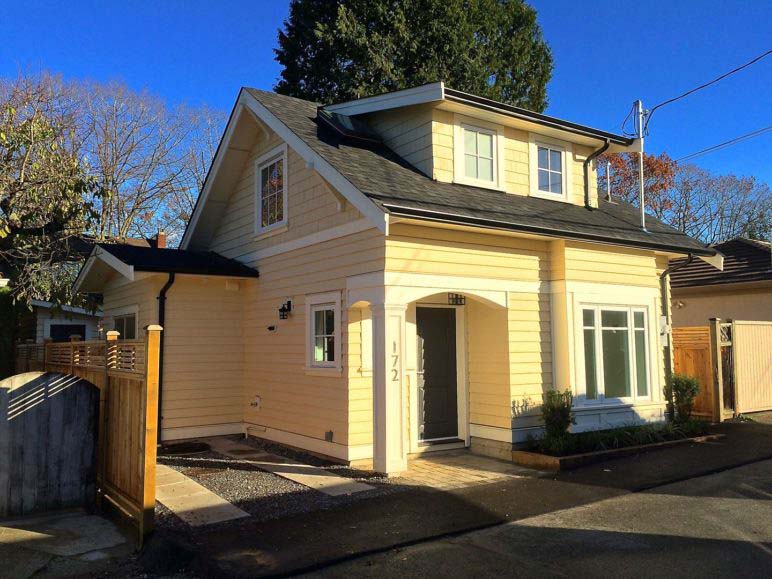
The most striking shift in recent years has been the open-riser stair – treads that seem to float, with nothing solid behind them. Light passes straight through. Sightlines carry across the room instead of stopping at a wall of steps. In a narrow Vancouver house or a compact laneway home, where every square foot is already spoken for, that transparency can be worth more than an extra window. The stair stops dividing the space and starts belonging to it.
Then there is the part you actually touch. The handrail is, quite literally, the one piece of design you hold in your hand every day, and it rewards care. Wood warms under the palm and ages beautifully. Slim steel reads honest and almost disappears. Either is worth spending on, because your hand remembers what your eye forgets.
Light does quiet work here too. A strip of warm light tucked under each tread turns an ordinary climb into something that glows softly after dark, and doubles as a gentle guide on a late-night trip downstairs. A small move with a large effect.
And do not overlook what sits beneath. The space under a stair is too often a closet of last resort, crammed and forgotten. Opened up, it can become a reading bench, a narrow shelf of books, a spot for a single chair and a lamp – or simply left empty so the room can breathe around the structure rather than choke on storage.
None of this demands a grand budget or a soaring entrance hall. A modest stair, thoughtfully drawn, changes how an entire home feels the moment you walk through the door. It sets the rhythm for how you move through every floor above.
At LVA Concepts, we treat the staircase as one of the first design decisions, not the last. Handled as sculpture rather than plumbing, it becomes the quiet centrepiece a home is built around – the thing guests remember afterward without quite knowing why.